EP Turbo Blowers became part of Runtech’s portfolio following the acquisition of Ecopump Oy in 2008. The strategic move quickly proved successful, establishing a strong position for technology within the industry.
Today, Runtech continues to focus on innovation and technical development. A significant milestone was reached in September 2025, when the Kotka factory celebrated the production of the 1,000th EP Turbo Blower, underlining the company’s commitment to energy savings, carbon footprint reduction and sustainable water management.
Responsive vacuum systems for dynamic paper machine environments
Operating variables such as machine speed, basis weight and felt condition are constantly changing. This variability means that a fixed vacuum setting cannot provide optimum performance across all production conditions. New paper machines are typically supplied with vacuum capacities that include broad safety margins. As a result, a considerable proportion of the installed capacity often remains unused during normal operation, generally corresponding to between 40% and 60% of the originally specified value.
Conventional vacuum technologies do not provide the flexibility required to fine-tune vacuum levels, reduce energy consumption and adapt to changing paper production conditions.
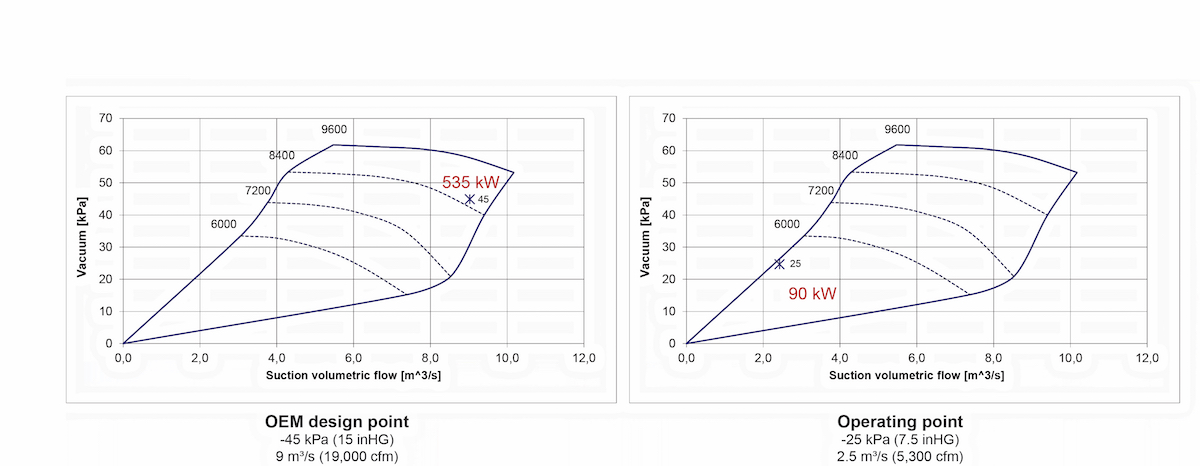
Manufacturers of new paper machines frequently adopt an excessively conservative approach, specifying vacuum capacities that exceed practical operating requirements. This can leave end users with inefficient systems that unnecessarily increase energy costs.
RUNTECH addresses this issue by retrofitting systems that are only three or four years old, achieving energy savings of more than 50%, or over 10 GWh per year. It is therefore essential to define the vacuum system specifications clearly with the machine supplier, avoiding the default installation of cost-driven solutions that do not take the system’s total operating costs into account.
The ability to adapt rapidly to changing operating conditions is a key feature of Runtech vacuum systems. In a press rebuild, for example, the system can be optimized to operate efficiently at capacities substantially below the original equipment manufacturer’s design points, demonstrating the value of an adjustable and responsive vacuum system.
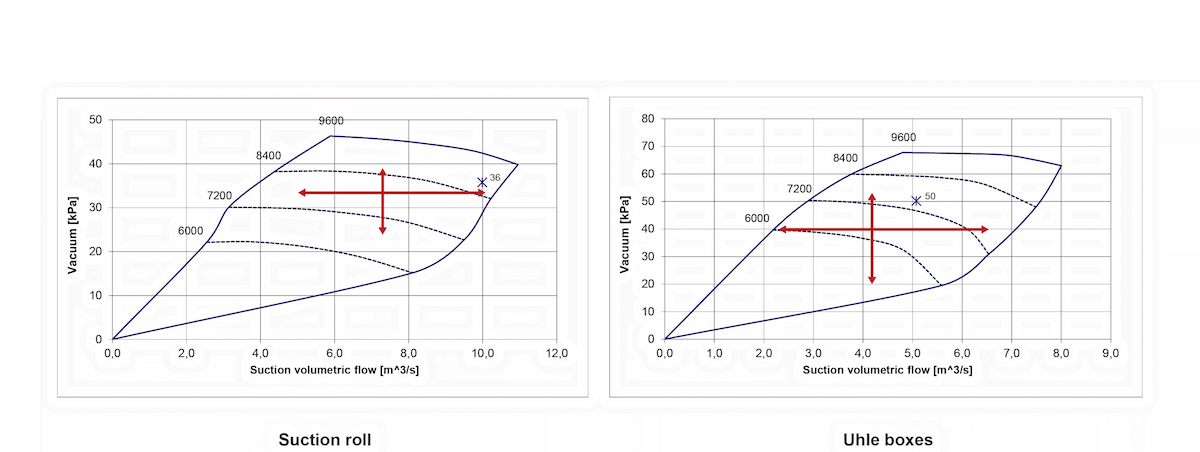
A double-width tissue machine may be specified with a vacuum capacity designed to cover several possible operating scenarios. Under stable production conditions, however, the actual capacity requirement may be considerably lower, allowing the vacuum level to be adjusted to optimize both performance and energy consumption.
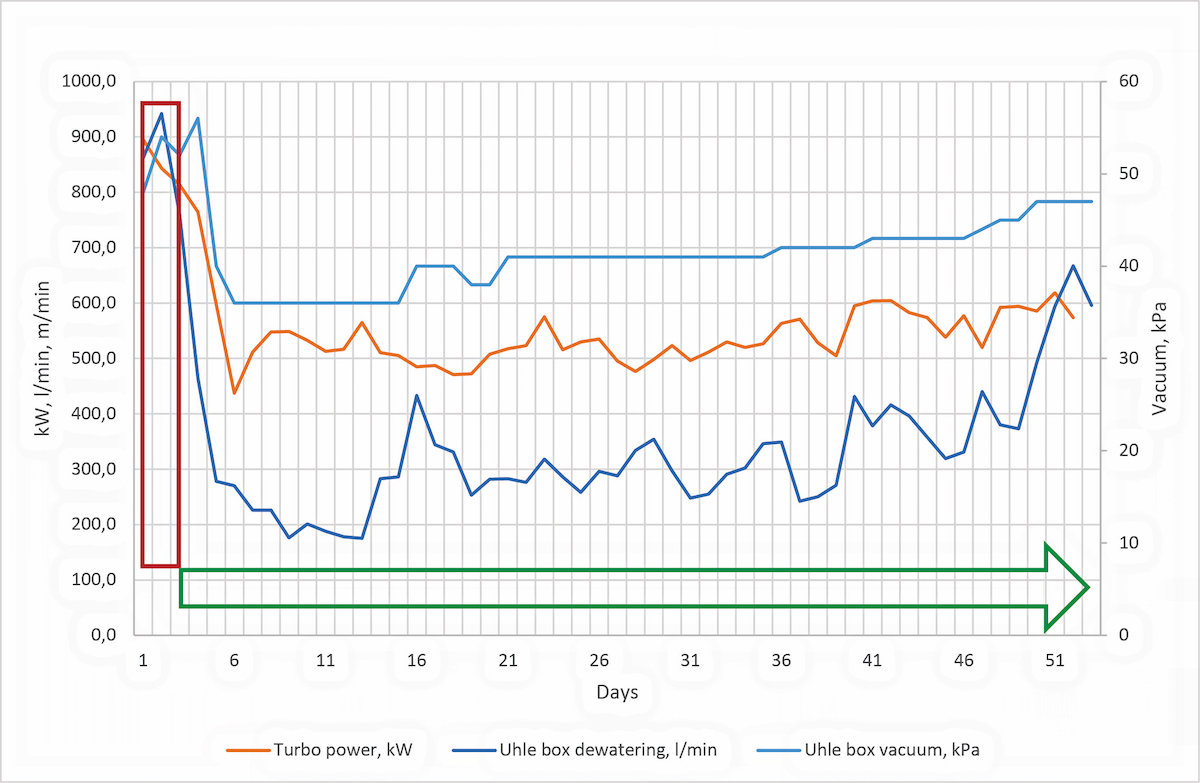
The integration of EcoFlow dewatering measurements provides benefits that extend beyond electricity savings. It also simplifies vacuum control, improves moisture removal, reduces water consumption, accelerates felt conditioning, lowers felt costs, increases production and supports the recovery of thermal energy from the exhaust air.
Advances in sustainable papermaking technologies
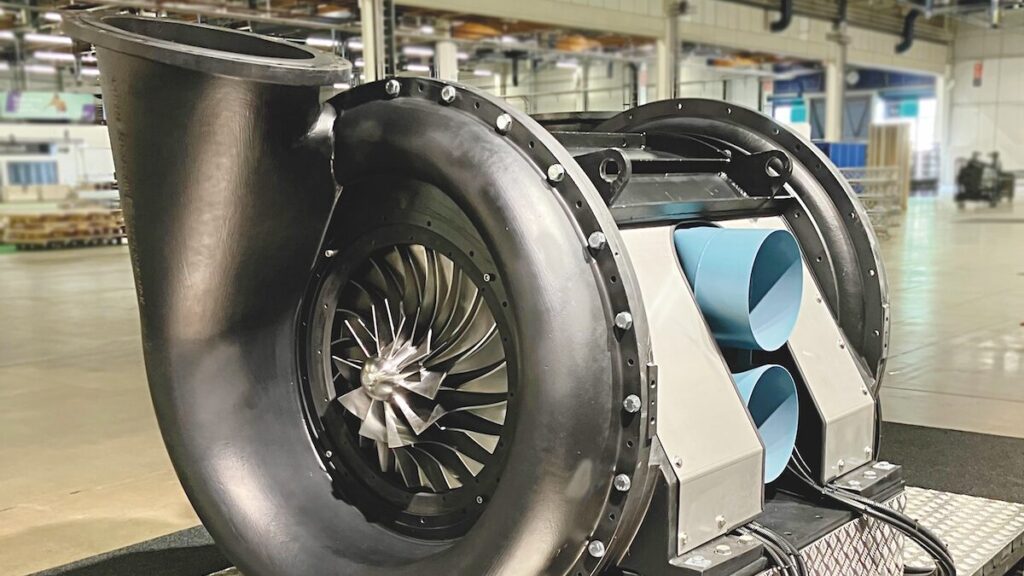
In response to market requirements, Runtech introduced a new turbo blower model. The EP650 AMB incorporates active magnetic bearing technology and is equipped with shroudless impellers precision-machined from a single piece of a specially developed forged steel alloy, ensuring maximum strength and dimensional stability.
The innovative three-dimensional impeller design provides high efficiency across a broad operating range. By offering both shrouded and shroudless impellers, Runtech can optimize turbo blower performance according to the specific requirements of the process.
The precise axial force measurements provided by the magnetic bearings have also enabled Runtech to refine the impeller design and further improve process efficiency. With the integration of active magnetic bearings, the Turbo Blowers achieve wire-to-air efficiency exceeding 60% across a wide operating range, with peak values above 70%.
Active magnetic bearings provide frictionless operation and offer customers a low-maintenance solution. The rotor is supported magnetically, eliminating contact between moving and stationary parts. The completely oil-free design also removes the risk of oil leakage and provides high resistance to deposits forming on the impeller.
“AMB technology represents a significant step towards more sustainable papermaking and offers an exceptionally low total cost of ownership. The compact dimensions and material efficiency of EP Turbo Blower technology, combined with reduced energy consumption throughout its service life, make it a unique solution,” states Ville Lahdensuo, R&D Director at Runtech Systems.
Torna indietro