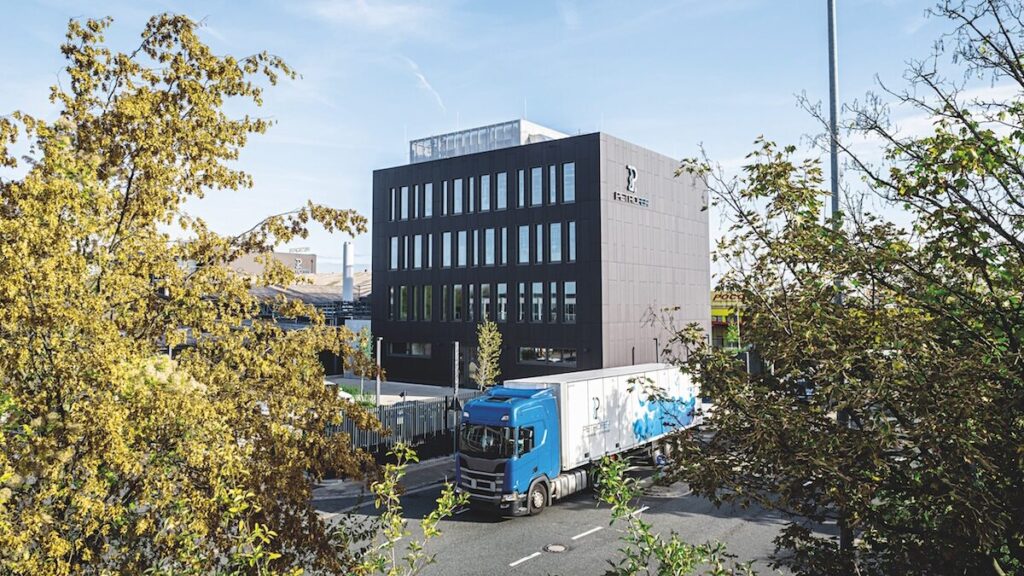
Founded in Germany in 1948, PETROFER has developed over nearly 78 years into one of the leading companies in the production and distribution of industrial and process lubricants, as well as speciality chemical solutions. Today, the company operates 14 production sites, employs more than 800 people and maintains a market presence in over 70 countries worldwide.
PETROFER’s success is based on close collaboration with customers and partners throughout the industry. Their day-to-day challenges guide the development of practical and reliable solutions that combine long-standing expertise with forward-looking technology.
EMBOLUBE, the company’s range of water-based embossing lubricants, is a clear example of this approach.
After operating in the paper industry for around four decades, PETROFER has recently expanded its product development activities to include paper and nonwoven converting. Within the converting process, the company identified an opportunity to make an important contribution to process safety and sustainability.
From process challenge to product development
In converting, embossing rolls are exposed to paper dust and deposits from adhesives and other contaminants. These residues can accumulate within the fine structures of the embossing pattern and harden at elevated temperatures. This may affect the appearance of the embossing, impair roll cleanliness and contribute to picking or unstable converting performance.
Conventional white mineral oils help keep the rolls clean, but their application can generate oil aerosols around the machine. Regular exposure to this aerosol is undesirable for operators, as it may adversely affect their health. The need for these lubricants increases further as operating speeds rise. The electrostatic charge generated by the movement of the paper web can also lead to sparks.
At the same time, the lubricants commonly used in embossing-roll application systems generally have a low flash point. This combination exposes both operators and machinery to a significant fire risk, with all the resulting consequences.
These challenges in terms of safety, health and efficiency formed the basis of PETROFER’s research and development work. The result was EMBOLUBE 120 D, whose performance was recognized with the Sofidel Award. Building on this achievement, PETROFER has now developed EMBOLUBE into a complete range of water-based embossing lubricants.
Key advantages
The EMBOLUBE range consists of water-based emulsions designed for embossing-roll lubrication. The products combine effective antistatic and roll-cleaning properties with a substantial reduction in fire risk. The range includes different viscosity grades and more sustainable alternatives, allowing the most appropriate solution to be selected for different machine types and application systems.
Its principal characteristics include: excellent lubrication and cleaning performance; reduced heat generated by friction between the paper and the roll; a non-flammable, water-based formulation with no flash point, significantly reducing fire risk; considerably lower dosage requirements due to the product’s specific composition; absence of MOSH, mineral oil saturated hydrocarbons, and MOAH, mineral oil aromatic hydrocarbons; compliance with current food-contact regulations; reliable availability of raw materials, helping to limit price pressure during periods of disruption; reduced maintenance costs and machine downtime; ready-to-use formulation; improved ply adhesion; increased tissue softness.
EMBOLUBE has also been compared with silicone-based lubricants, which provide an alternative to conventional white mineral oil in the paper industry. Many silicone-based oils available on the European market are primarily manufactured in Asia. During periods of major international disruption, these products may be affected by significant supply-chain delays, resulting in substantial increases in the costs of both raw materials and finished products.
Their production is also highly energy-intensive and environmentally demanding. Although silicone-based oils can provide a useful alternative for reducing fire risk on a converting line, they do not offer the cost-effectiveness required for a sustainable treatment concept.
Case study: outstanding results
One customer had previously experienced up to three fire incidents per year. In addition to the substantial financial damage and the risk to operators working around the machine, insurance costs have increased exponentially.
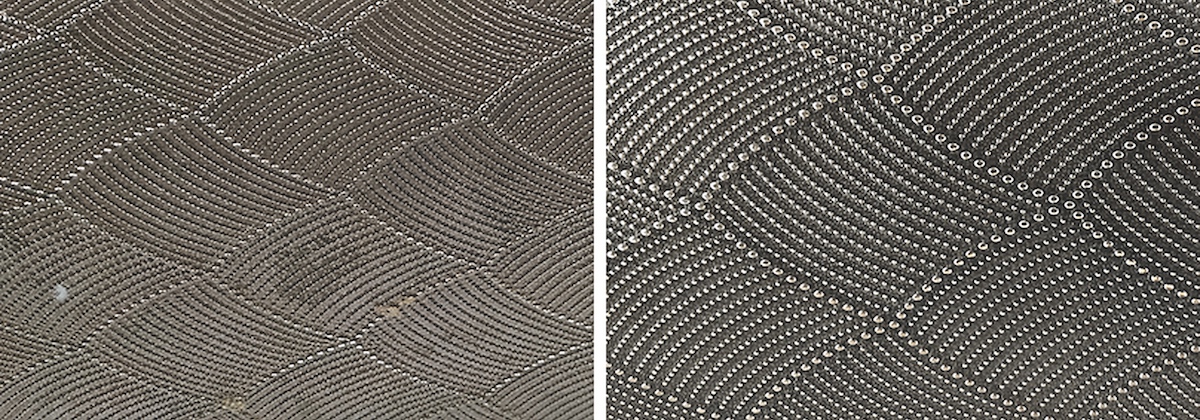
PETROFER therefore organized a trial on the customer’s Gambini converting machine. Before the test, the embossing roll was heavily contaminated with paper dust, debris, stickies and visible adhesive residues. The roll appeared off-white, largely because fine paper dust had become embedded in the relief pattern. After 30 minutes of using EMBOLUBE, the fine dimpled reliefs were free from paper dust and debris, and the embossing roll had returned to its original color.
The embossing lubrication frequency was adjusted from every second log to every sixth log, reducing product consumption by 66% compared with the white mineral oil previously used. No operating problems were observed, and the embossing roll remained in excellent condition. In addition to substantially reducing product costs, the lower dosage greatly decreased aerosol formation around the machine. This also reduced the frequency of machine stoppages required for cleaning and significantly improved production efficiency.
By using a non-flammable product, the customer was able to reduce both the fire risk and the frequency of fire-related incidents considerably. As an additional benefit, the customer’s insurance provider substantially reduced the related insurance costs. Improvements in ply adhesion and tissue softness were also observed. Softness measurements increased from 71.8 to 74.7 Handfeel points.
In conclusion, EMBOLUBE significantly improves the efficiency of embossing-roll lubrication. It is suitable for all commonly used application systems and offers considerable potential for reducing operating and management costs, while improving safety, lowering fire risk and supporting consistent tissue quality.
Torna indietro