Today, paper mills and converters are facing shorter production runs, greater product variability, increasingly stringent quality requirements, and growing pressure to reduce costs and environmental impact.
This context is redefining the concept of efficiency. The future of sheeting is no longer simply about producing more in less time, but about creating intelligent, flexible, and connected systems capable of adapting to changing operating conditions.
“Sheeting technology has reached a very high level of maturity in terms of mechanical performance. The next step is to make these systems more intelligent, more connected, and more adaptable to our customers’ needs,” explains Carlos Muriel, Sales & Marketing Director at Pasaban.
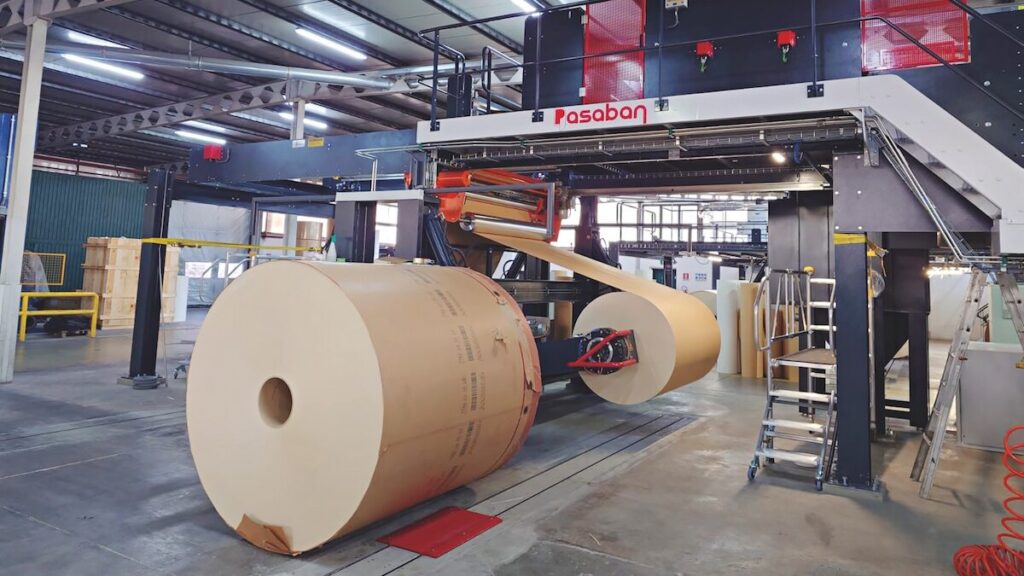
Modern sheeters already incorporate advanced automation technologies, including automatic format changes, motorised knife positioning, automatic tension control, automatic web guiding, and automated stacking. These solutions reduce manual intervention, shorten setup times, and improve production consistency. The next step is to combine them with data analytics and artificial intelligence.
Every modern sheeter generates valuable information on speed, tension, cutting parameters, optimal settings for each individual order and overall production performance. Analysing these data can reveal recurring patterns and inefficiencies, while artificial intelligence can extend these capabilities through predictive maintenance, anomaly detection, process optimisation, and operating recommendations.
Intelligent systems can detect early signs of component wear, helping to reduce unplanned downtime. They can also optimise operating parameters for different substrates, improving product quality and limiting waste. This enables mills and converters to move from reactive operations towards a predictive approach.
Flexibility is equally important. Paper mills and converters are increasingly required to process different materials, including lightweight and recycled paper, while responding quickly to changing customer demands. Rapid format changes, adaptable machine configurations, and open, scalable control architectures are therefore becoming essential.
The intelligent sheeter must also form part of a connected production environment. Integration with MES, ERP, logistics platforms, and other factory systems can improve production planning, traceability and process visibility. The objective is to move from isolated machines to connected ecosystems in which information flows continuously between the different production stages.
At PASABAN, the future of sheeting is seen as the combination of mechanical precision, intelligence, flexibility, and connectivity. With decades of experience in the design of sheeters for paper, board and pulp, the company aims to provide high performance today while ensuring adaptability to the requirements of tomorrow.
“Our goal is to combine precision and intelligence. We want to provide our customers with solutions that not only perform well today, but also prepare them for the future,” says Muriel.
Sheeting is therefore evolving from efficiency to intelligence. The sheeter of the future will not simply cut paper at high speed. It will understand the process, respond to changing conditions, support operators, anticipate problems and contribute to the optimisation of the entire production system.
AI-driven based solutions also help address the growing shortage of specialized personnel due to workforce expectations and values among newer generations have contributed to higher employee turnover rates.
Torna indietro