
Paper, board, pulp and tissue manufacturers are faced with the challenge of reducing their production costs while at the same time producing in an environmentally friendly and resource-saving manner.
The IBS Group has been helping them to achieve these targets for decades. Based on countless successful projects to optimize board, pulp, tissue and paper machines as well as current developments in the areas of environment, energy and resources, the company has now identified seven sustainability targets for paper producers and prioritized them based on a typical production cost structure for containerboard in Central Europe.
For each target, a catalog of the most effective measures has been drawn up, which show both ecological benefits and a return on investment of 3 to 12 months. They illustrate that even small investments can bring considerable savings.
Optimization of fiber composition
Measures to optimize fiber composition while maintaining or improving product quality are highly lucrative. Fiber costs account for almost 50% of production costs – regardless of whether production is based on virgin or recycled fiber. The costs and availability of raw materials often vary considerably.
In addition, the quality of waste paper is continuously deteriorating. These are just some of the reasons why high-quality raw materials should be used as selectively as possible. One highly efficient strategy for optimizing the use of fibers is to shift the raw material composition towards more sustainable, but usually lower-quality raw materials.
Another measure is aimed at reducing or shifting the basis weight. Alternatively, measures can be taken in fiber preparation to achieve a higher fiber yield. These also lead to a reduction in reject quantities and associated disposal processes. The sustainable savings potential of the measures described above is considerable and the ROI usually just a few months. All approaches have already been successfully implemented countless times by IBS.
Reduction of thermal energy consumption
Around 20% of production costs are attributable to thermal energy consumption. Steam consumption for paper drying is the largest cost factor, followed by the thermal energy required for the preparation of mass starch. Outdated steam boxes were also identified as significant steam consumers.
These often work inefficiently and consume a disproportionate amount of steam. A key approach to reducing thermal energy consumption is to reduce steam consumption for paper drying. IBS achieves this by increasing the dry content in mechanical dewatering, improving sheet formation or increasing the sheet temperature.
With such measures, steam consumption for drying paper can be significantly reduced as part of optimization projects and an ROI of just a few months can be achieved. Another measure is aimed at reducing steam consumption in the preparation of mass starch.
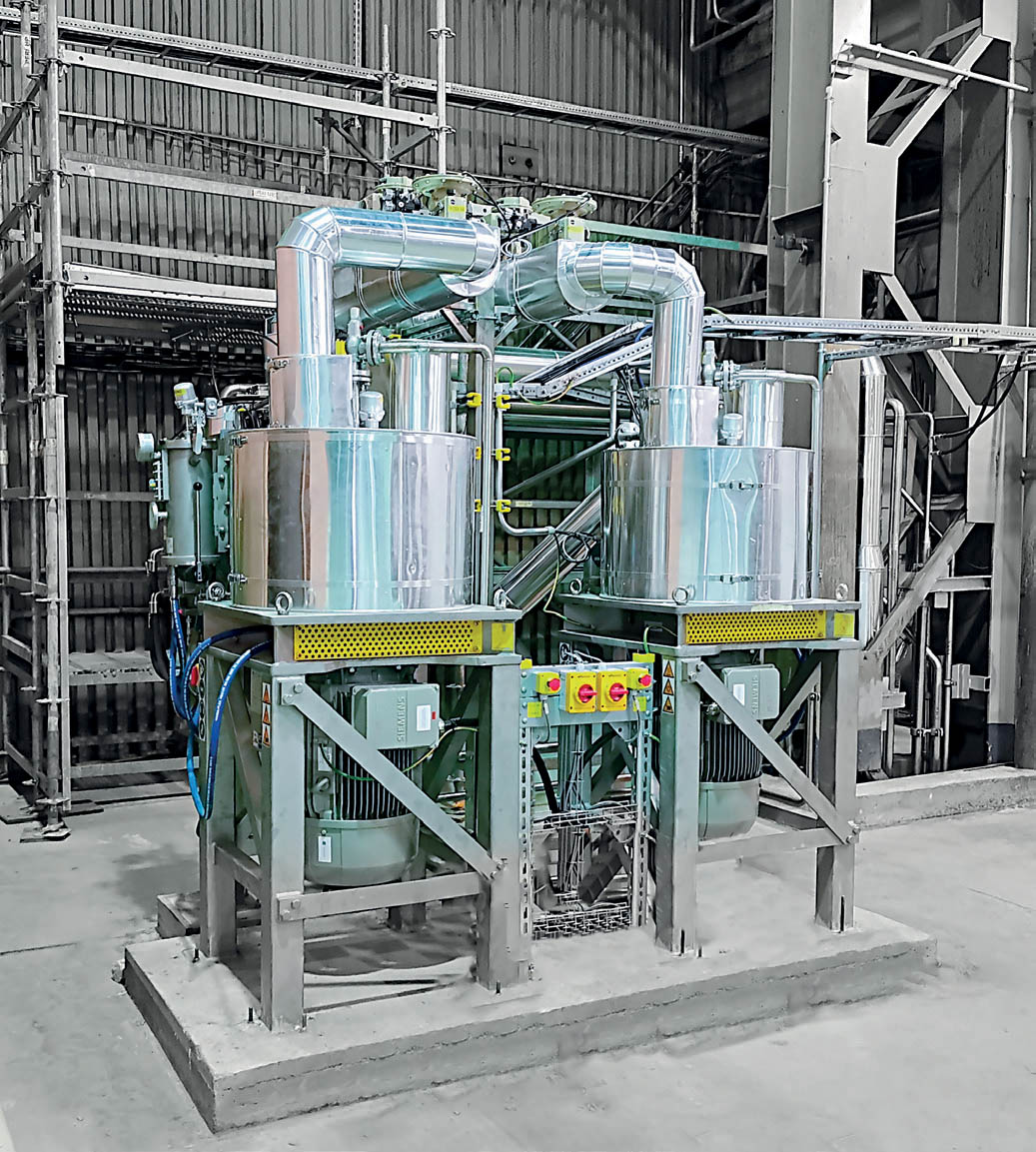
By using the patented cooking process for the preparation of mass and surface starch from PGA GmbH (a member of the IBS Group), it has already been possible to save thousands of tons of steam per year and achieve an ROI of just a few months. In addition, the starch cooker offers maximum flexibility in the use of different types of starch and offers on top some starch savings. IBS is also focusing on optimizing existing steam boxes and installing new steam application technologies. Modern systems work more efficiently and consume up to 50% less steam.
Reduction of electricity consumption
Electricity consumption for vacuum supply, drives and motors accounts for around 10% of total production costs. Vacuum sources such as fans, pumps and blowers are particularly large consumers of electrical energy.
key strategy for reducing power consumption is to adapt the vacuum requirement to the actual production requirements. This includes optimizing the vacuum curve across the entire wire section and using automatic vacuum control valves. The aim is to optimize vacuum consumption in such a way that existing vacuum pumps and the associated power consumption can be saved.
By replacing outdated dewatering systems and adapting existing dewatering blades and suction covers to the current production conditions, a reduction in the required drive power can also be achieved. These measures are highly profitable and have been implemented many times over.
Reduction of chemical consumption
The cost of chemicals and their handling are a significant factor in paper production. Experience shows that chemical costs account for around 10% of production costs. The main cost drivers are mass starch and surface starch, whereby the prices and availability of the different types of starch vary greatly.
These are followed by paper strength additives and other process chemicals. Due to the lower quality of recycled fiber, these are increasingly used to at least keep the strength parameters and machine availability stable.
The handling of chemicals is often complex and demanding. The central measure for reducing chemical consumption is the use of the patented cooking process for the preparation of mass and surface starch from PGA (IBS Group). By improving the preparation of starch, this process reduces starch consumption considerably, requires less thermal energy and at the same time offers maximum flexibility in the use of different starch types.
Within projects, surface starch consumption was reduced by hundreds of tons per year, the switch from potato to corn starch was made possible or steam consumption for mass starch preparation was reduced by up to 70%. But chemicals can also be saved through measures that improve sheet formation.
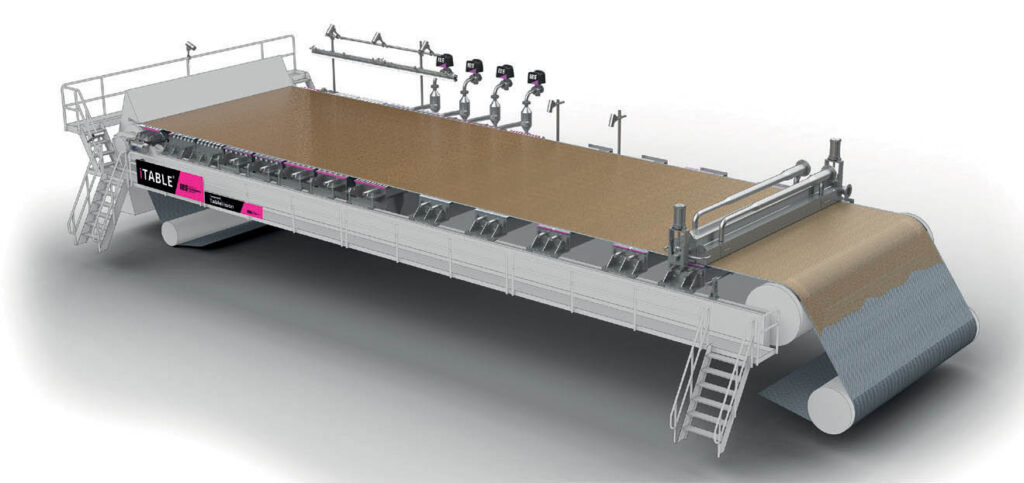
By installing an iTABLE®, for example, it has been possible to reduce the amount of mass starch required by 12%. All of the above measures lead to considerable savings and an ROI of just a few months.
Reduction of water consumption
Water has always been an important issue for the paper industry, but it varies greatly from region to region. In some areas, fresh water cost is rising sharply and climate change is exacerbating the issue in general. The cost of wastewater treatment is also rising continuously, which further increases the financial burden on companies.

In addition, different qualities of water are available within the production process, the costs of which also vary. In view of these developments, water management is becoming an increasingly important task in the paper industry, encompassing both ecological and economic aspects.
A key strategy for optimizing water consumption is to reduce the amount of fresh water required and therefore also the amount of waste water produced. Such measures not only help to conserve resources, but also reduce the costs of water treatment. In the course of projects fresh water consumption for felt cleaning has been reduced by 80%.
Another approach is to replace fresh water with lower-quality water for selected applications. Through targeted measures in the treatment of mass starch, around 80,000 m³ of dilution water was replaced by clear filtrate.
Reduction of paper breaks and broke
Paper breaks and broke waste all previously invested resources. In addition, paper breaks disrupt continuous production, put a strain on personnel and machines, reduce production volumes and therefore profitability.
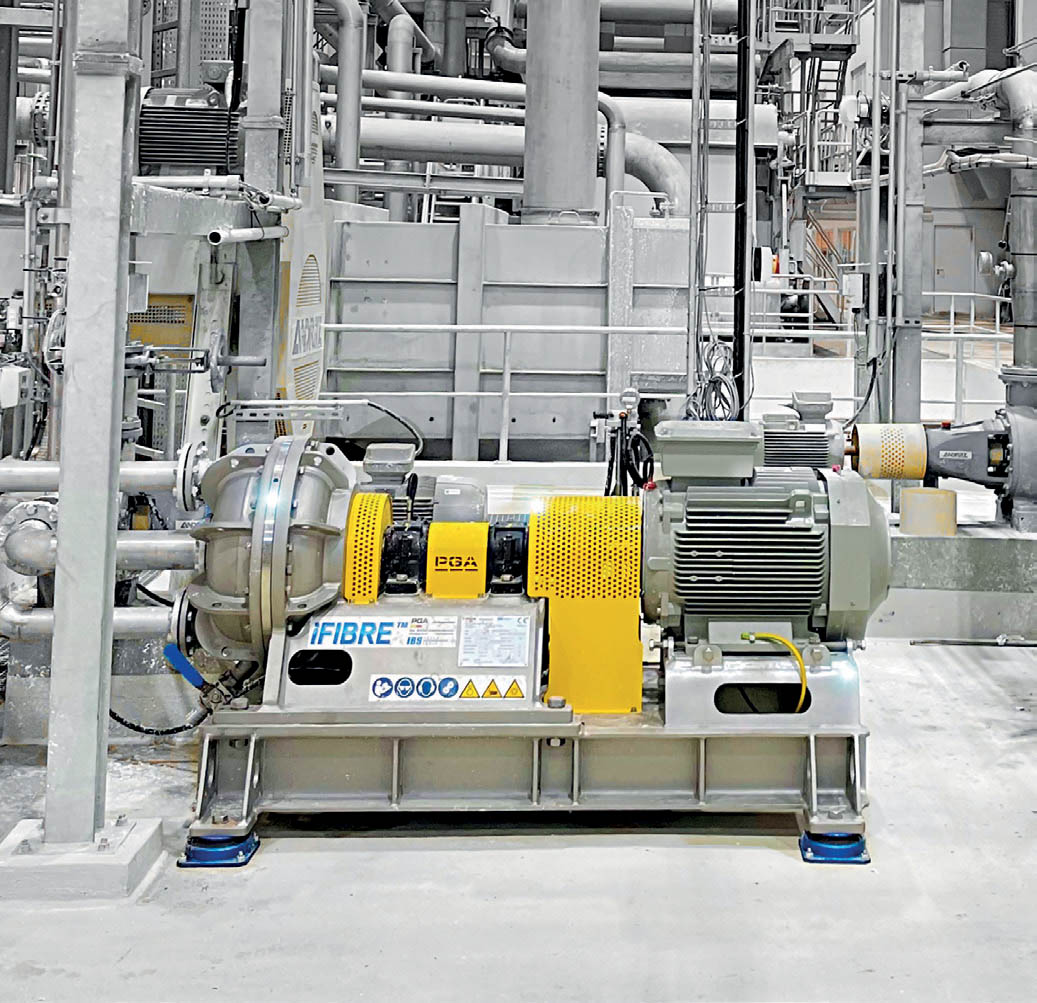
Along with the direct loss of production, a paper break always results in a quality-restricted rampup phase until stable operation is achieved. The reduction of broke and unplanned downtime not only saves resources, time and money, but also leads to an increase in production.
A central solution approach offering great potential in this area is recognizing and understanding the causes of paper breaks. Through precise analysis, these causes can be identified and avoided in the future. By replacing an outdated web monitoring system with modern technology, the number of paper breaks was reduced by 40% in one project. This led to a production increase of several thousand tons per year.
Extension of service life of machine clothing
Increasing the service life of dewatering wires and press felts reduces material consumption and increases productivity. The longer the service life, the lower the material requirement for clothing and the production downtime caused by necessary stoppages.
In most cases, the costs of production downtime are higher than the material costs. In addition, every machine clothing usually requires a certain start-up time. The decisive measure for sustainably increasing the service life of machine clothing is to optimize the cleaning process. Appropriate measures have increased the service life of dewatering wires and press felts by up to 25% within the scope of projects.
Conclusion
The seven sustainability targets of the IBS Paper Performance Group show that ecological responsibility and economic success can go hand in hand. By taking targeted measures to conserve resources and optimize processes, paper manufacturers can not only reduce their environmental impact, but also achieve considerable cost savings and increase their competitiveness.
The basis for any optimization is an in-depth audit by IBS experts. The practical examples and solutions of the IBS Group illustrate how these targets can be effectively implemented to ensure a sustainable future for the paper industry.
IBS PAPER PERFORMANCE GROUP
The IBS Paper Performance Group is the world’s leading specialist in the optimization of board, pulp, tissue and paper machines – with high-quality machine components, innovative system solutions and services as well as highly specialized and motivated employees.
Almost all major machines worldwide use products from the Teufenbach- Katsch (Austria) based group on a daily basis. With 24 locations and over 800 employees worldwide, the company is present wherever the board, pulp, tissue and paper industries are at home.