Electrification involves much more than replacing gas-fired equipment with electric heaters. It requires a fundamental redesign of the way thermal energy, electrical infrastructure and control systems interact across the plant.
Traditional combustion systems rely on centralized heat generation. Electrified systems distribute thermal generation closer to the point of use, enabling more precise temperature control, improved process consistency, and the elimination of direct on-site emissions.
At the same time, large-scale electric heating introduces significant electrical loads that must be carefully integrated into the plant infrastructure. Successful projects therefore require thermal and electrical engineering to be considered together from the earliest design stages.
Selecting the appropriate power architecture
A key consideration is the selection of the most suitable power architecture. Low-voltage heating systems, typically operating up to 690 V, are well suited to distributed applications such as process air heating and drying systems.
They offer flexibility, modularity and a practical route for retrofits and phased electrification. As power requirements increase, however, higher current demand can complicate distribution design and increase infrastructure costs.
Medium-voltage heating systems address these challenges by delivering large amounts of thermal power while reducing current requirements. This simplifies electrical distribution and makes medium-voltage solutions particularly suitable for centralized, high-capacity heating applications.
In practice, many mills can benefit from a hybrid approach combining low-voltage flexibility with medium-voltage scalability.
Process air heating and power management
Process air heating represents one of the most immediate opportunities for electrification. WATLOW addresses this application with electric duct heaters that provide uniform heat transfer, precise temperature control, and modular installation options suitable for both new projects and retrofits.
Watlow electric duct heaters are designed for continuous industrial operation across a wide range of voltages and watt densities, meeting the demanding conditions found in pulp and paper facilities. As system capacity increases, these solutions can be integrated into a broader medium-voltage architecture to optimize overall plant performance.
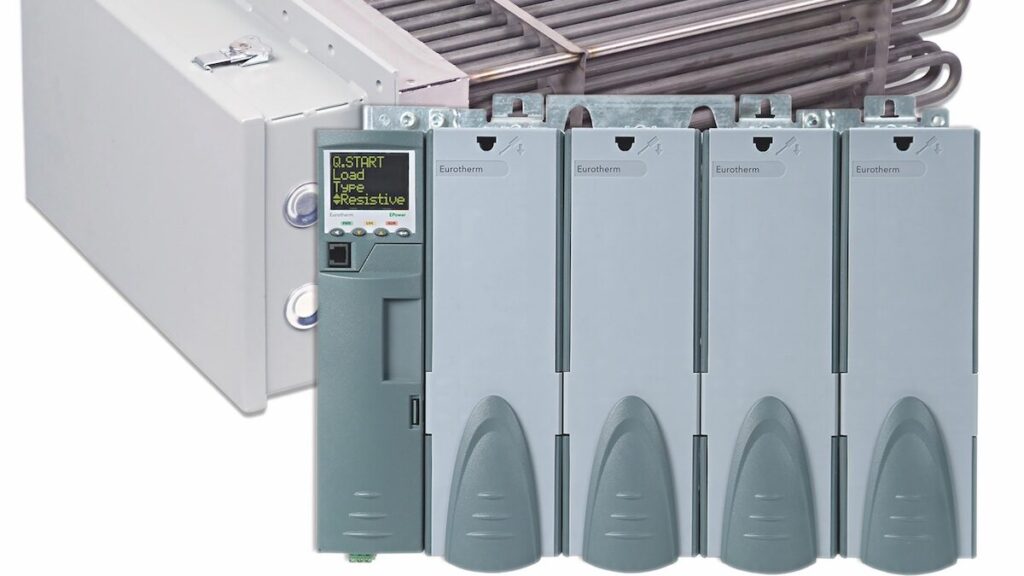
As electrification expands, power management becomes increasingly important. Advanced Predictive Load Management, PLM, functions coordinate multiple heating loads to maintain a stable electrical demand profile. Through load balancing and load shedding strategies, facilities can reduce peak demand, improve power quality, minimize stress on electrical infrastructure, and better manage energy costs without compromising thermal performance.
Electrification should be viewed as a system transformation rather than a simple technology substitution. By integrating thermal processes, electrical infrastructure and advanced power controls within a unified architecture, pulp and paper producers can create a scalable path towards decarbonization while improving reliability, efficiency and long-term competitiveness. Watlow supports this transition as a single partner, providing integrated heaters, power controllers and thermal management solutions engineered to work together.
Torna indietro