
Thanks to high-performance polymers, integrated tissue producers now have a new alternative: the reusable COREX® polymer core, developed to replace traditional cardboard cores.
COREX® cores were developed and patented as early as 1998 by IDROTHERM 2000, also benefiting from the company’s strategic proximity to the Lucca area, one of Europe’s leading paper districts and home to the industrial group that has been producing tubes since 1976.
The limitations of cardboard
Cardboard cores have long-term reliability and low purchase costs. Their management, however, creates recurring issues: recovery, repair, storage, handling and disposal require space, labour and activities outside the core paper-production process. Many mills have improved reuse rates, but this can involve indirect costs, additional handling and, in some cases, dedicated external personnel.
Safety aspects also need to be considered, including fire risks linked to core smouldering and residues generated by cardboard wear.
The polymer alternative
COREX® polymer cores are specifically designed for tissue production. Manufactured from high-strength materials, they offer a much longer service life than cardboard and can be adapted to different industrial conditions. Experience from early adopters of technology indicates a service life of more than five years, together with a substantial reduction in core replacement frequency.
Economic and logistical benefits
The key factor is life-cycle cost. Although a polymer core has a higher unit price, its durability can reduce the overall cost per tonne produced. Logistics can also be simplified: polymer cores resist humidity and weathering, require less protected storage and reduce recovery and maintenance activities. This translates into less handling, lower forklift use and less time devoted to material management.
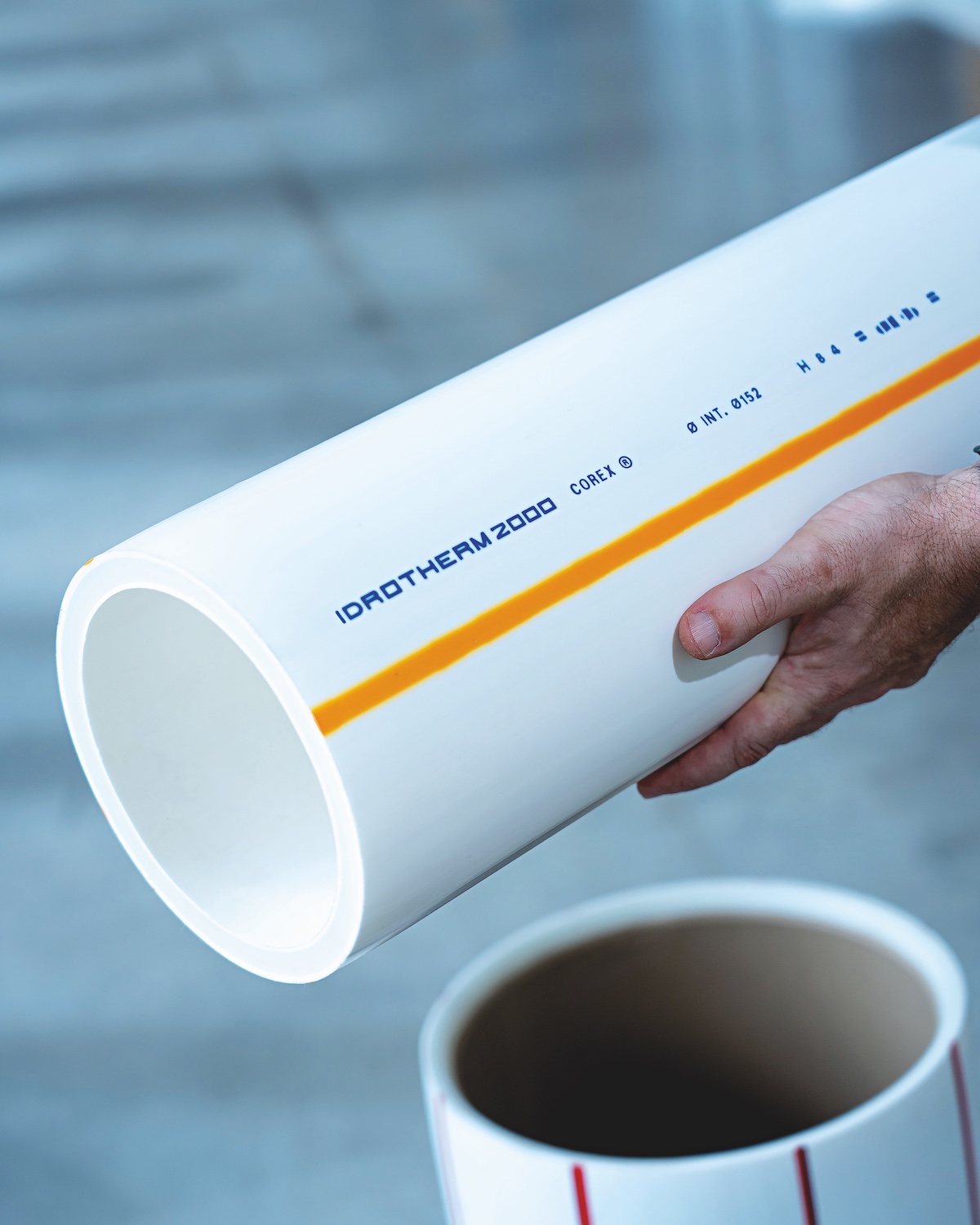
COREX® Bio-Sourced
From an operational standpoint, lower paper adhesion to the polymer surface can reduce waste during converting. Cleaning is also easier and can be carried out using pressurised water systems.
Safety can benefit as well, since fewer manual operations are required to remove paper residues. From an environmental perspective, longer service life helps reduce raw-material consumption, transport and recovery activities. At the end of its life cycle, the polymer can be recycled and reintroduced into the supply chain, supporting circular-economy objectives.
Idrotherm 2000 also offers COREX® cores made from bio-sourced plastics derived from renewable, non-fossil sources. This maintains the technical performance required for industrial use while combining reusability, recyclability and a lower environmental footprint. For producers focused on ecological transition and certification targets, bio-based polymers can represent an additional option.
A strategic opportunity
The polymer core is not simply a new consumable, but a potential upgrade to a long-established element of tissue production. By reducing hidden costs and supporting sustainability objectives, COREX® polymer cores from Idrotherm 2000® offer tissue producers an opportunity to improve operational performance and strengthen competitiveness.
Torna indietro