Operators of modern paper machines are confronted with a growing flood of data throughout the entire production process. Sensors and measuring devices on almost all relevant components continuously provide information, for example on process parameters, quality values, machine speed, plant status and production targets.
At the same time, the complexity of the plants is increasing. Consequently, the number of measuring points is also growing – and with it the volume of data displayed on the screens in the control room.
Complexity in the control room: opportunities and risks of the data flood
At first glance, this means that paper technologists are gaining more levers with which to further increase the efficiency of their production. At a time when the global paper industry is struggling with rising costs and overcapacity, continuous optimization is crucial for economically viable production. However, this wealth of information also has a downside.
Lars Mallasch, Group Technical & Sustainability Director at Mondi, describes it as follows: “We analyzed up to 3,000 alarms on one machine in a single week.” This is because the control room of a modern paper mill often has 15 screens displaying data from different systems. Keeping track of everything is a challenge, even for experienced specialists. But these are becoming increasingly scarce. As a result, there is a very real danger that, although all the data is available in principle, it is becoming increasingly difficult for employees to make the right decisions.
To meet this challenge, papermakers are increasingly turning to automation. However, this often involves isolated solutions that only optimize individual processes. The big picture – how all processes between stock preparation and paper winding are interconnected – is missing. In the worst case, optimization in one area creates new, even more complex challenges elsewhere.
Holistic instead of isolated solutions: Voith’s approach
As a full-line supplier, Voith has always pursued a holistic approach to paper manufacturing. In recent years, the technology group has consistently driven forward digitalization and networked paper production as a pioneer.
Numerous forward-looking technologies have been developed under the umbrella of Papermaking 4.0, all with the aim of creating a sustainable concept for the autonomous paper mill. A significant milestone and the next step on this path is the recently introduced MillOne platform. It has already left the laboratory and proven itself in practice on the first production lines.
With MillOne, Voith has developed an ecosystem that can intelligently network all systems in a paper production plant and optimize all process steps in real time. The result: more efficient production, reduced waste and increased profitability.
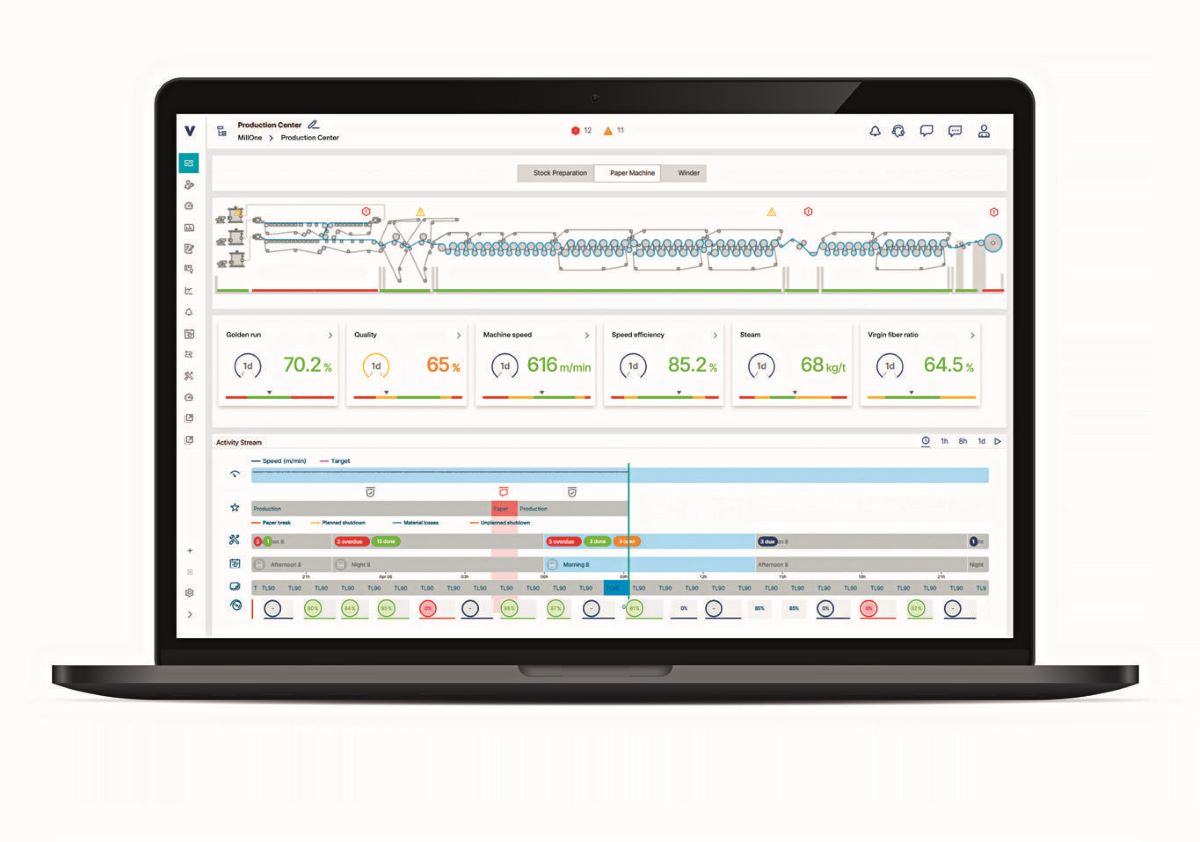
MillOne uses all available data streams to provide operators with a comprehensive picture of production, including clear instructions for action. From maintenance management and MES systems to process archives and production line data, information is collected, standardized, contextualized and aligned with production processes and business objectives. At the same time, the system maintains an overview and draws its own intelligent conclusions.
Thanks to these close links between all applications, potential sources of error can be identified and eliminated at an early stage through preliminary analyses. This helps to avoid unplanned downtime and optimize resource consumption – completely automatically.
Empowering operators, avoiding downtime
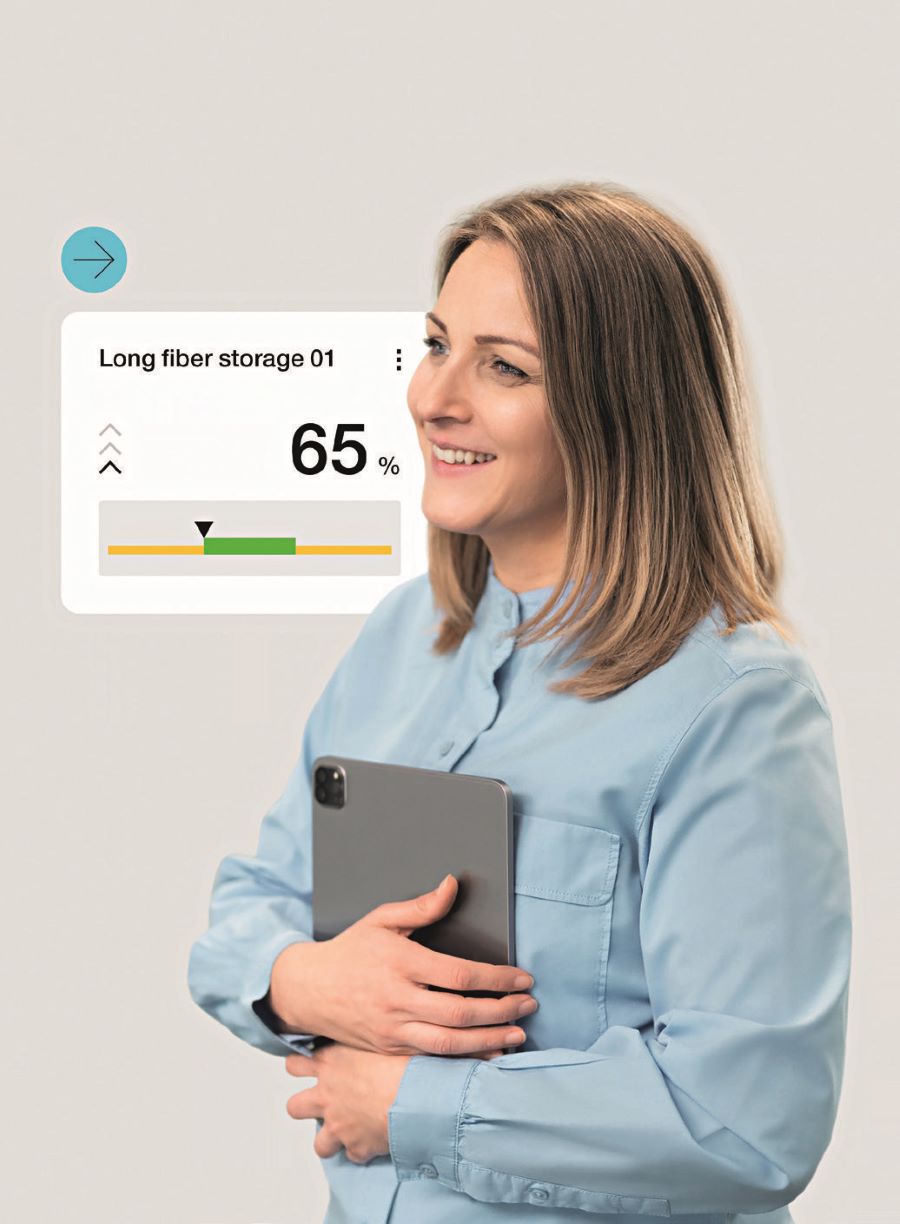
supported by MillOne’s intelligent data analysis.
Thanks to continuous synchronization, data is connected only once, so all digital applications can access the latest information at any time. This makes data usage more efficient, significantly more transparent and more user-friendly. For operators, this means they see only the relevant performance indicators and can discuss them as needed.
Thanks to precise role assignments, the information is always tailored to the individual user and related to the operator’s current location. All superfluous information is hidden, which significantly reduces cognitive load.
“MillOne enables teams in the control room to make faster and more accurate decisions,” explains Dr. Julius Flitsch, Director of Solution Management Digital at Voith Paper. In addition, the intuitive user interface makes operation much easier and more pleasant. Initial users confirm this effect.
This is the case at Mondi, which has benefited from the advantages of MillOne for over a year. “For the first time in the development of such digital solutions, our operators are pushing us to be faster with new modules,” reports Lars Mallasch, both surprised and delighted.
Solution Manager: preserving knowledge and reducing downtime
MillOne offers more than just acute support in day-to-day operations. With the Solution Manager integrated into the ecosystem, the platform addresses another key problem: in many mills, troubleshooting is performed ad hoc without documenting the solution. “As a result, valuable knowledge is often lost, and teams have to solve the same issues repeatedly,” says Korbinian Hitthaler, Advanced Process Control & IIOT Engineer at Voith Paper.
This is exactly where Solution Manager comes in. It enables failures to be systematically logged, causes to be analyzed and solutions to be stored centrally.
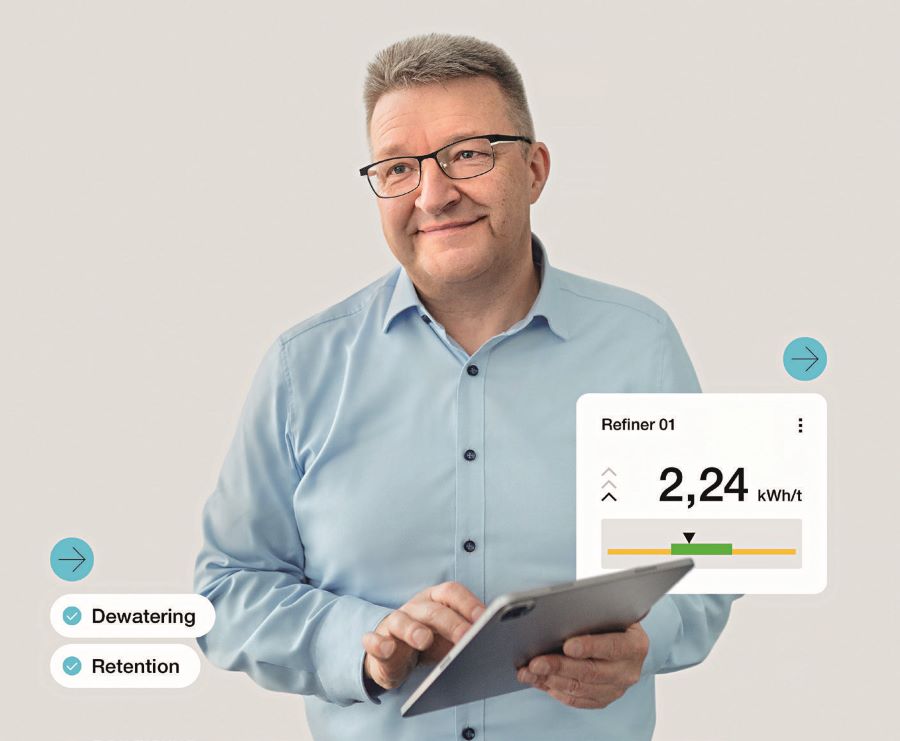
process parameters via the MillOne platform.
This gradually creates a comprehensive knowledge database that all operators can access. Since Solution Manager can be fully integrated into existing plant systems, it can access all relevant data. The proposed solutions are therefore context-specific and customized.
The goal is to enable operators to solve a growing number of problems independently. In this way, the Solution Manager helps to significantly reduce machine downtime. If a known or similar problem occurs again, MillOne’s Solution Manager immediately provides a proven solution thanks to its learning systems. This process is supported by step by-step instructions with AI-based recommendations for action, which are continuously improved.
Learning management and skills development
The capabilities of Solution Manager also give rise to another innovative element of MillOne: the option of integrating a learning management system (LMS). This scalable tool is offered by Voith as an expression of its holistic approach. It enables operators to easily create, use and share training courses on daily tasks – for example, with new or less experienced colleagues. This makes training and further qualifications more practical.
Training courses from the Voith PapermakingAcademy complement the tool. In combination with HR systems, paper manufacturers can track and expand skills development on a role-based basis.
As a result, the goal of empowering operators to take on more responsibility can be achieved more quickly and consistently. The LMS thus becomes a key tool for effectively countering the shortage of skilled workers. “With MillOne, every operator can be the best operator,” summarizes Ulf Grohmann, Director Product Management Autonomous Paper Mill at Voith.
The road to an autonomous paper mill
For Sun Paper, one of the world’s leading papermakers, targeted guidance and learning support were the decisive factors in implementing MillOne. In recent years, Sun Paper has installed 18 paper machines in collaboration with Voith. The Asian corporation is also finding it increasingly difficult to find talented employees who can operate the equipment. Production automation is therefore high on the agenda, and interest in MillOne was strong from the outset.
However, the goal was not to reduce the number of skilled workers. Quite the contrary, as Ying Guangdong, Vice General Manager and Chief Engineer of Sun Paper, emphasizes: “We would like to allow our operators to make higher level decisions that directly impact quality, output and the cost of our production.”
The LMS is therefore an important tool for Sun Paper to expand the skills of its operators. However, “systems that provide sufficient process and business data to enable decision-making processes directly at the frontline” are just as essential, according to Ying. MillOne’s holistic view of the plant and the extensive support for operators, for example through predictive monitoring solutions or automated plant parameterization, are decisive factors in enabling the platform to contribute to faster and more stable operation.
The development of MillOne incorporates many insights from Voith’s flagship Papermaking Vision study, supplemented by the new UX/UI concept.
“The know-how that we contributed is enormous and is based on years and years of development and research,” recalls Grohmann. “A major challenge was to transfer all the complex systems and data into a clear and easy-to-use platform. To achieve this goal, we talked to many customers.”
Voith also attached great importance to the modular structure of MillOne. This allows the ecosystem to be implemented regardless of the level of automation and existing digital solutions.
Back