ANDRITZ has a number of dedicated research and development centers around the globe that test and evaluate almost anything that might go through the pulp or tissue production processes. These centers also offer ANDRITZ experts the opportunity to proactively keep ahead of the game in trialing different machine setups as well as experimenting with various raw materials from around the world, in order to create the best possible fiber-based products.
The design and equipment of the ANDRITZ Fiber & Tissue R&D Centers are tailored to cater not only to customers but also to research institutes, universities and industry suppliers. These state-of-the-art facilities provide a unique opportunity for all stakeholders to conduct trials under authentic industrial conditions.
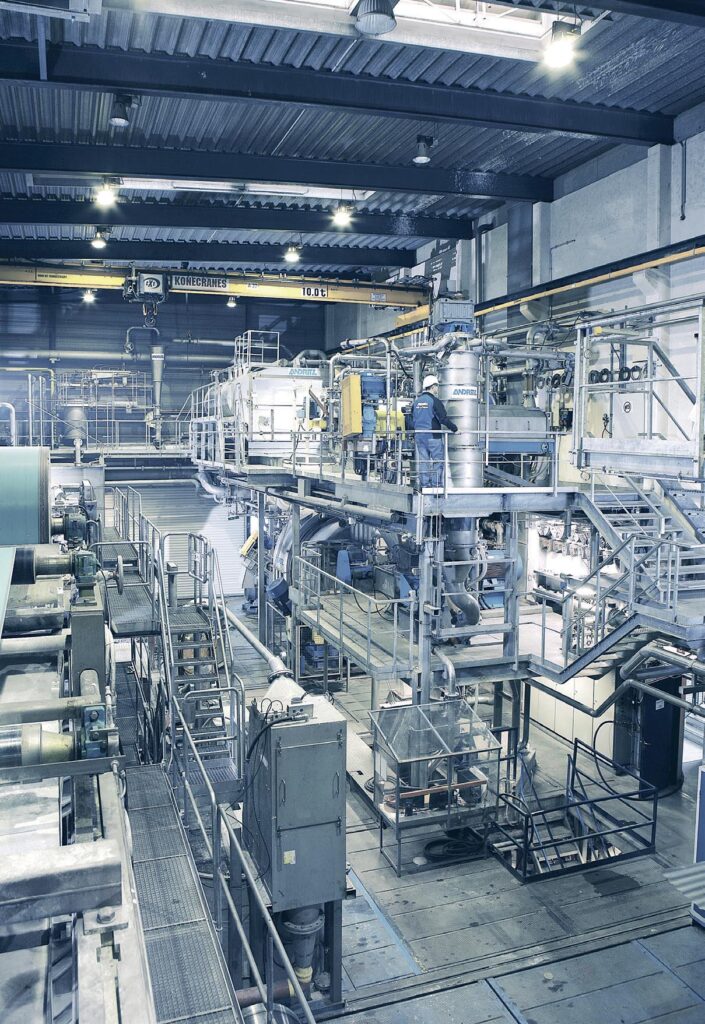
Customers can mitigate risks associated with venturing into new markets, exploring novel raw materials or testing innovative production technologies for their existing operations. Simultaneously, research institutes, universities and industry suppliers gain valuable insights and collaboration opportunities in a realistic industrial setting.
The setup of the Fiber & Tissue R&D Centers is optimized to provide an ideal environment for customers to bring their samples and attend their trials in person. Alternatively, customers can also send their samples to ANDRITZ for analysis. In recent times, the Fiber & Tissue R&D Centers have been primarily dedicated to sustainability initiatives, with a strong emphasis on reducing water, chemicals, fiber and energy consumption.
Additionally, ANDRITZ is actively exploring alternative raw materials together with its customers to further enhance the sustainability efforts. Another key focus of the centers is the development of cutting-edge technologies for the digitalization of production processes. By prioritizing these areas, they strive to stay at the forefront of innovation and contribute to a greener and more efficient industry.
The Fiber R&D Center in Graz, Austria, was built in 1982 for customer trials and internal R&D and comes with full-line capabilities. The center provides for process R&D as well as direct work for customer trials. Limits of raw material usage, from virgin and recycled to annual fibers, can be explored as well.
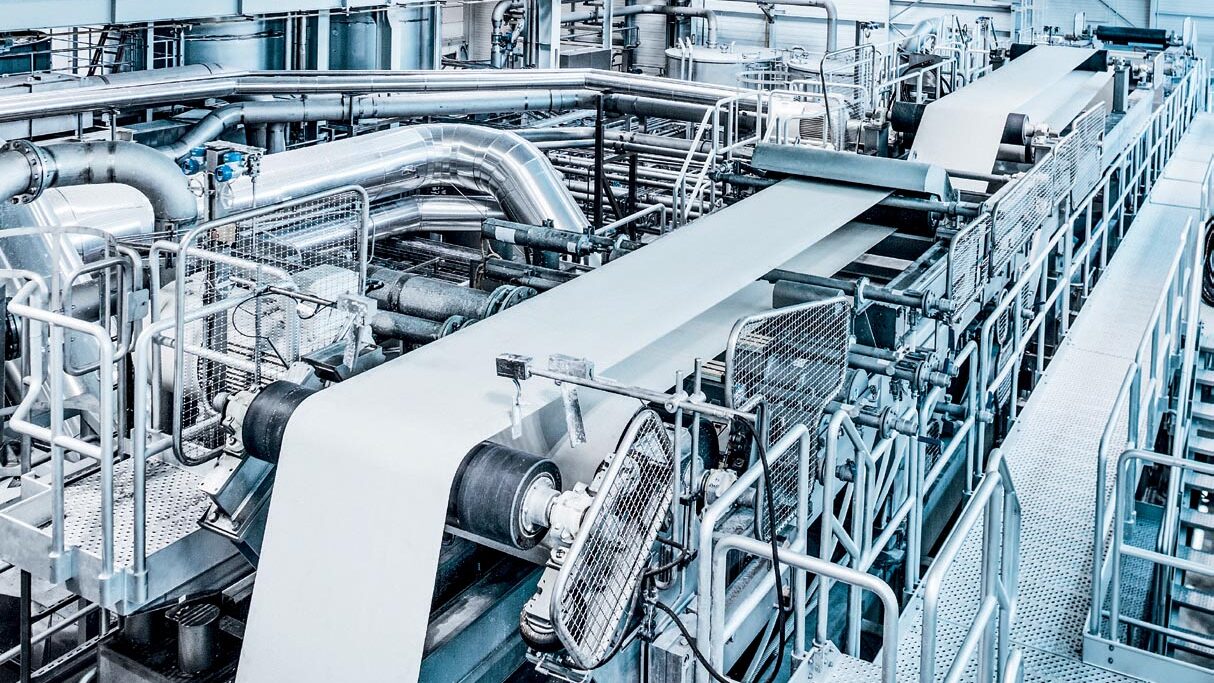
The center is flexible enough to accommodate single machine testing and complete process lines. Built and opened just five years ago, the PrimeLine TIAC Tissue Innovation and Application Center in Graz can be configured to produce dry-crepe, textured and structured tissue with various sub-categories. The plant comes complete with two TAD drums and a steel Yankee installed in one machine, enabling several energy and quality features to be tested and trialed.
Get to know Laura Liukkonen, ANDRITZ Global Director, Fiber R&D Centers
Since studying paper technology at Aalto University in Finland, Laura has spent over 10 years in the pulp and paper industry. She now heads up ANDRITZ’s three Fiber R&D Centers located in Graz (Austria), Springfield (Ohio, USA) and Foshan (China). Although responsible for all Fiber R&D Centers, Liukkonen spends most of her working life in Graz, dealing with customers from across the globe and making sure the whole operation runs as smoothly as possible.
“I am an early bird – says Laura. I like to get to the Fiber R&D Center by 6:30 in the morning so I can answer all my emails and make a list of all the most important tasks for the day. We have customers all over the world, from Asia over to Latin America, so my inbox is pretty full in the morning with enquiries, for example, from Japan and from the night before in Brazil. I try to answer our customers’ enquiries as soon as possible as our customers get very excited about receiving their results”.
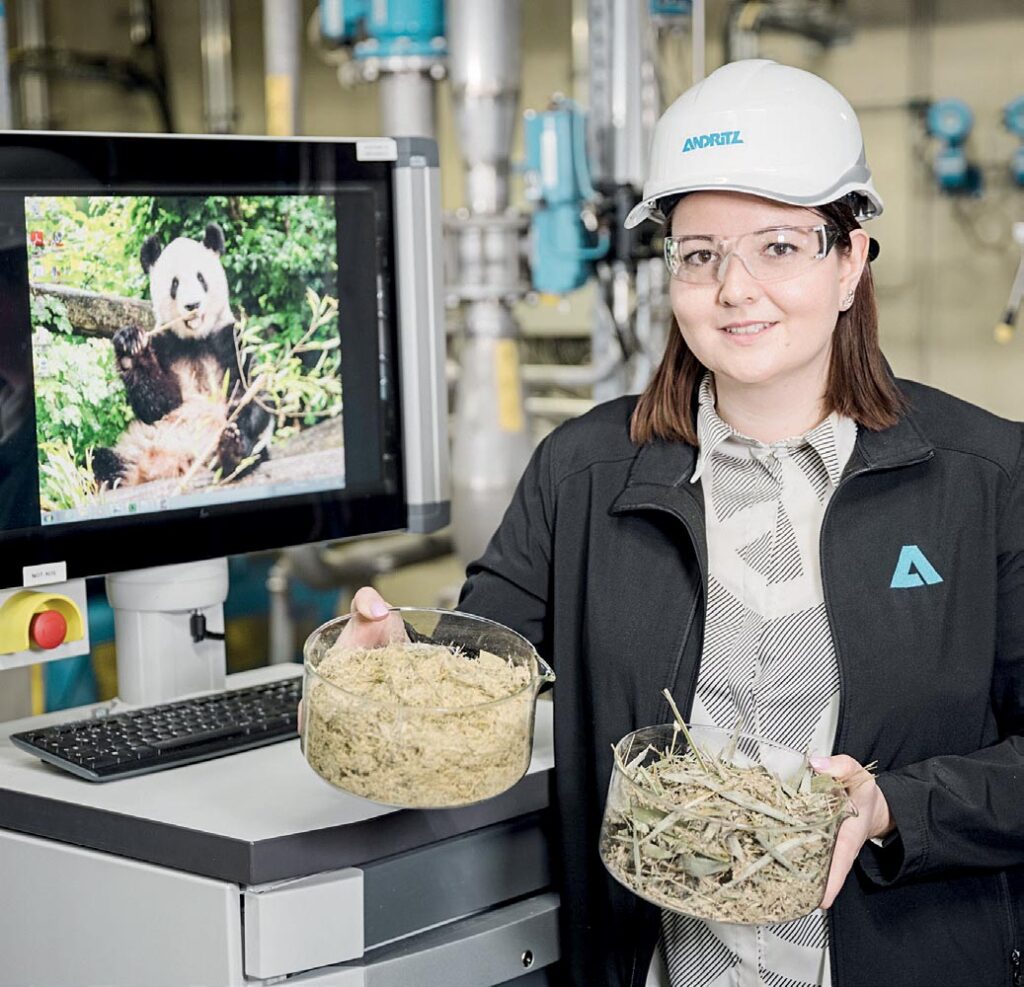
The center accommodates customers from around the world and a majority of them prefer to personally visit the facility to witness their trials firsthand.
“Around 90% of our customers like to come here in person so they can witness their raw materials being trialed and tested for themselves – says Laura. Although it can be stressful, it is the most effective method as it allows for immediate collaboration and resolution if any issues arise, which they often do. Pandemic-related visitor restrictions posed a challenge. However, we overcame this obstacle by leveraging IIoT in conjunction with our Metris extended reality solution (Metris XR), enabling customers to watch the trials live from abroad. This way of operating was challenging, but we made it work and successfully obtained the desired results”.
AVAILABLE EQUIPMENT IN THE FIBER R&D CENTER
PULPING
– FibreSolve FSR, FSV and FSH pulper for low- and high-consistency pulping.
– FibreFlow Drum FFD.
SCREENING
– Different types of ModuScreens for coarse, fine and headbox screening as well as fractionation including PrimeRotor.
DEINKING/FLOTATION
– SelectaFlot SFL flotation.
CLEANING WITH HYDRO-CYCLONES
– Various cleaner types including PrimeClean TO.
DEWATERING
– Pulp Screw Press SCP.
– Vertical Screw Thickener VST.
– DiscFilter DF with various filter segment designs (including bagless Conical cell CC technology).
ATMOSPHERIC AND PRESSURIZED DISPERSING
– Ultra-high dispersing with CompaDis CDI dispersing systems with heating screw or compact heating.
DEFLAKING
– DeFlaker DFL.
REFINING
– TwinFlo Prime disc refiner.
– Papillon refiner with cylindrical refining zone.
REMOVAL OF ASH OR FINES AND FIBER RECOVERY
– RotoWash.
– Mobile RotoWash.
HIGH-CONSISTENCY BLEACHING
– Peroxide bleaching in industrial scale.
– Laboratory bleaching.
EFFLUENT/REJECT TREATMENT
RejectCompactor ReCoL, ReCoC and ReCoF.
– Mobile sludge dewatering unit.
AGITATION
– Several chests with TurboMix TMX agitator.
AS WELL AS
– Pumps.
– Metris Automation solutions and equipments.
– Twin-wire sheet drying line for pulp drying trials available at the same facility.
One of the most interesting tasks Laura has taken part in is supplying refined bamboo for two elderly panda bears at Vienna’s Schönbrunn Zoo who were experiencing difficulties chewing raw bamboo.
“With our dispersing technology, we refine the bamboo for them, which highlights our ability to process various raw materials and to respond very flexibly to customer requirements and challenges, even with ‘customers’ like Panda bears”.
Laura manages a team of seven highly skilled experts who work in the laboratories and operate the trial machines. The trials conducted in the facility span across different durations. Along with customer quotations, taking care of customers on site and monitoring ongoing trials, she also looks after international standards, making sure that the measurement results are compliant and accurate.
“This is a really interesting job where no day is ever the same! – concludes Laura. Although I am a very technically oriented person, structured and precise, I love getting back to nature when I am not working and going for long hikes in the countryside”.
On the day we spoke to Laura, she was overseeing a trial to optimize pulp refining for tissue production in order to increase tensile strength and stretch without generating too many fines or losing bulk.
Get to know Thomas Pabst, Tissue Machine Operator, PrimeLineTIAC – Tissue Innovation and Application Center
Thomas studied pulp and paper technology at the University of Graz and is a fully qualified paper technician with over 13 years of practical experience. The machine hall at the PrimeLine TIAC houses the world’s most modern tissue pilot plant with a machine that offers virtually limitless flexibility. All kinds of tissue can be produced on the machine including dry-crepe, textured and structured products as well as continuously developed prototypes.
“We conduct trials for customers, R&D institutions, and, of course, for ourselves to turn visions into industry solutions – says Thomas. Our day begins by turning on the steam boiler and feeding the pulper”.
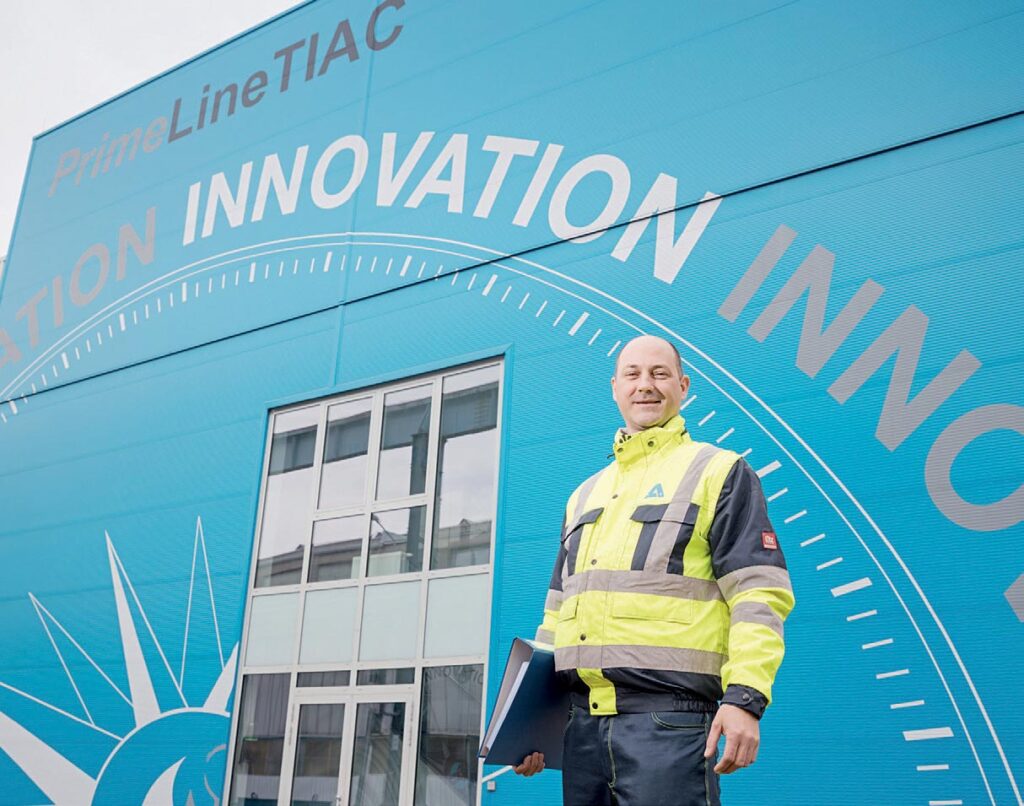
The PrimeLine TIAC allows customers the opportunity to conduct trials with completely new technologies that have not yet been launched on the market, as well as trials to improve end product quality. Testing possibilities include trials for pulp, chemicals, refining, and clothing, different press concepts, hot air, steam, vacuum concepts and much more.
The experts at PrimeLine TIAC collaborate closely with customers to define the objectives, develop a trial schedule, and ensure that the entire production line is set up optimally, starting from pulp and progressing through various technologies to the final product. Their collective efforts are aimed at maximizing the outcomes and successfully attaining the desired targets.
“An important area for us at the moment is sustainability, as the industry is experiencing challenges with energy consumption in particular – says Thomas. We are actively exploring methods to minimize water usage, reduce chemical usage, and minimize emissions in tissue production. Our focus is on developing sustainable practices that allow tissue to be produced with the least possible environmental impact. I work in a team that I call my ‘tissue family’. The machine I operate is a full lane, industrial scale pilot plant, accounting for all the parameters and challenges that an innovative tissue producer could possibly think of”.
PRIMELINE TIAC – TISSUE MACHINE CONFIGURATION
- For dry-crepe, textured and structured tissue
- Paper grades from 10 to 50 g/m2
- Yankee speed up to 2,500 m/min
- Reel speed up to 2,000 m/min
- Sheet width 600 mm
- PrimeFlow: headbox in 1-, 2-, 3-layer configuration.
- PrimeForm: CrescentFormer, TwinWire former.
- PrimeDrum: two TAD drums, 14 ft diameter.
- PrimePress: suction press, shoe press.
- PrimeDry Steel: Yankee, 16 ft. diameter.
- PrimeDry Hood HT: gas-heated Yankee hood.
- PrimeRun: sheet run with passive/active air foils.
- PrimeReel: centerwind assisted reel.
The pilot machine has more than 3,000 sensors that record real-time information and data for detailed production analysis and future tissue projects.
The Tissue R&D center also comes complete with Metris All-in-One Platform that controls and monitors the stock preparation system and tissue machine in operation. This allows the operators to work with the highest efficiency and get the best result out of each trial. After a hard day working on the pilot machine, Thomas can be found at the local model airfield in Graz, where he flies his model aircraft.
“There is a saying that ‘only the sky is the limit’ – says Thomas. This is my theme – it perfectly characterizes my hobby as well as the work done on the pilot machine. There are limitless possibilities for new ideas for tissue production when we have pilot plants like the one at PrimeLine TIAC and the Fiber R&D Centers” – concludes Thomas.
Back