by: Carlos Muriel, Pasaban
This diversification stems from two key factors: first, the rise of specialized packaging solutions across sectors such as cosmetics, pharmaceuticals and premium food products; second, the move toward plastic substitution and the development of more sustainable, paper-based alternatives, especially in the food industry where until now plastic has been predominant in all kinds of packaging.
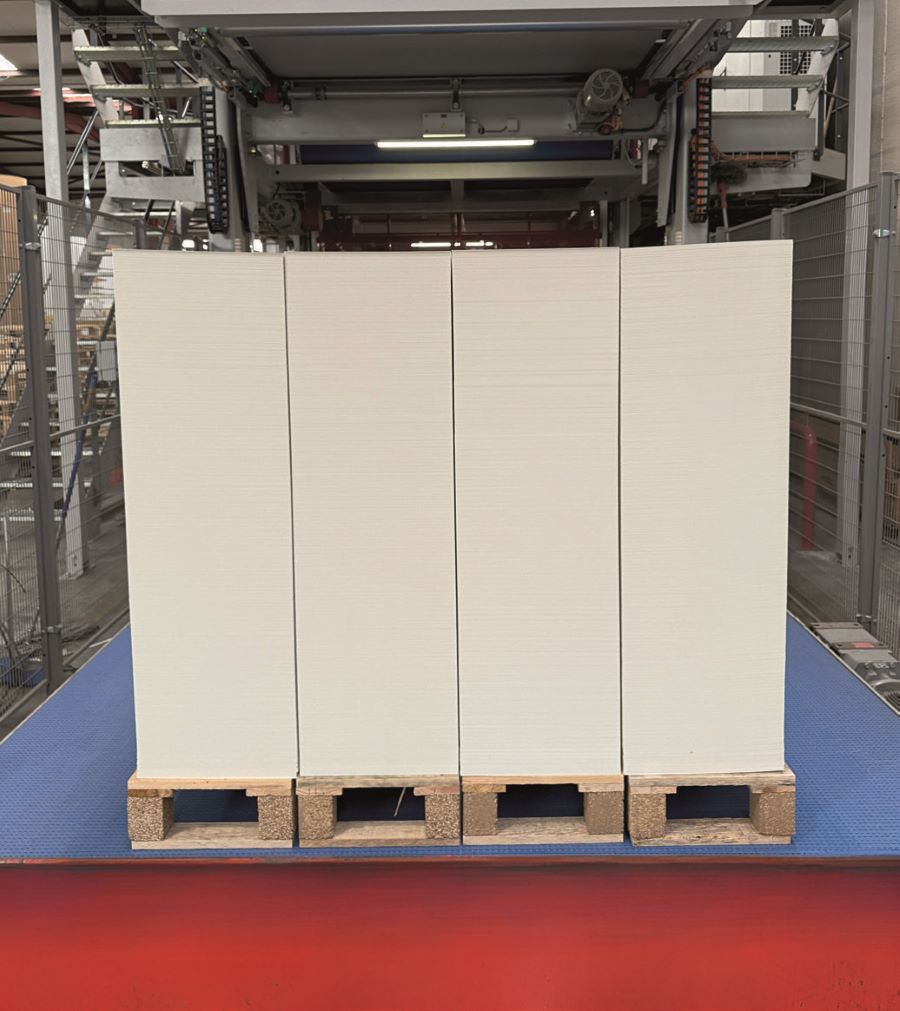
These trends have created new requirements for sheeting equipment, not only in terms of cut quality, but also stack formation, substrate preservation and operational flexibility.
Precision cutting
Cutting coated or multilayer substrates requires a high level of mechanical stability. Traditional systems using steel blade holders may not always deliver optimal performance in fast-changing production environments.
For this reason, extensive testing of alternative materials such as carbon fibre and aluminum has been carried out, offering better dynamic response without compromising rigidity. Blade quality, geometry, and alignment must also be adjusted depending on the substrate type, especially in cases involving heavy boards or materials prone to delamination.
These details, although invisible to the untrained eye, can have a major impact on stacking accuracy and downstream print performance.
Automation as a lever for versatility
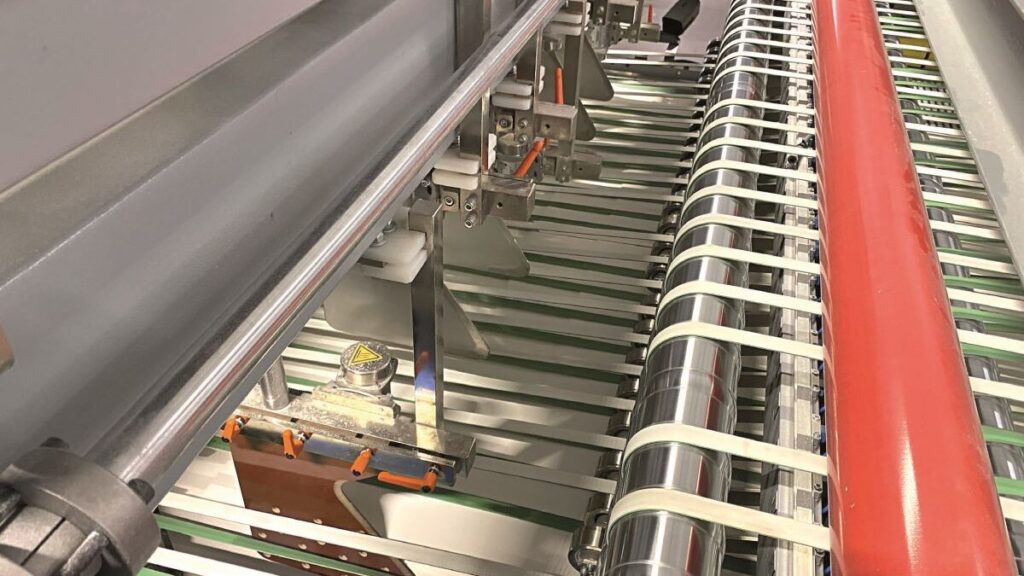
Shorter runs, more frequent changeovers, and increasing format variation demand higher automation levels. State-of-the-art sheeters now integrate automatic knife positioning, format memory, pallet alignment, and overlap control systems.
Thanks to these advancements, what used to require 15–20 minutes of setup now takes just 2.5–4 minutes in advanced machines depending on each configuration.
Automation is no longer just about speed; it is about consistency and repeatability, even when human intervention is limited. This is especially important for converters operating under tight delivery schedules or across multiple shifts with varying skill levels, as well as for the sheeting operations in mills where maximum production capabilities are targeted.
Substrate preservation
One often overlooked aspect of the sheeting process is how delicate substrates behave during transfer and stacking. High-speed operations can introduce static electricity, micro-abrasions, or deformation of carton edges, especially in materials with gloss or tactile finishes.
To mitigate this, modern sheeters incorporate anti-static bars, airflow management systems and redesigned stacker geometries that reduce impact forces during descent. Surface finishes on rollers and belts are also chosen to suit the substrate, ranging from low-friction coatings to special profiles for embossed or micro-perforated materials.
Digital integration and remote diagnostics
Today’s equipment must also align with broader digitalization efforts. Open control architectures allow seamless integration with ERP and MES systems, enabling real-time order tracking, preventive maintenance alerts, and even predictive diagnostics.
Remote access has become standard. At Pasaban, for instance, technicians can monitor encoder values, alarm logs, and drive behavior from headquarters. This allows for faster resolution of issues and reduces machine downtime, critical for mills and converters managing just-in-time production.
Adapting to new paperboard applications
As sustainable packaging continues to evolve, sheeters must anticipate new challenges. For example, the growth of recyclable barrier boards and fibre-based food containers will require machines that adapt quickly to unfamiliar grammages and surface behaviors. In this context, manufacturers must not only supply machines, but also act as consultants – analyzing substrate samples, simulating critical production parameters, and suggesting tailored machine configurations. This collaborative approach has proven essential in developing machines that are both robust and versatile, prepared to meet the demands of tomorrow’s substrates.
Conclusion
In the current market, flexibility, precision, and alignment of accurate configuration based on the requirement of the grades operated are not optional, they are essential. As the variety and complexity of substrates grows, equipment must evolve to guarantee high-quality results while maintaining production efficiency.
The success of a sheeting line today depends on a detailed understanding of materials, robust mechanical design, and intelligent automation.
For mills, converters, and printers navigating these challenges, partnering with an experienced and responsive equipment supplier can make all the difference.
In this regard, Pasaban’s mindset over the decades has been based not only on designing machines with excellenten gineering, outstanding robustness and quality, and electronic controls that incorporate the latest hardware on the market, but also on control software that reflects the decades of accumulated experience of the most expert technicians and engineers.
All of this is aimed at providing customers with the most advanced, productive, and high-performing machines on the market.
In the current market, although in the past some users could, to some extent, operate with mediocre equipment that performed its function with varying levels of reliability in terms of performance and maintenance, this approach is clearly no longer sustainable today.
Current trends toward shorter formats, the need for agile delivery, and the high-quality requirements across the full range of substrates now push the market toward acquiring more advanced machines, those that offer high performance, high production capacity (faster operation speeds and more agile changeovers), low maintenance costs and low operating costs.
The collateral damage and opportunity costs associated with underperforming equipment often mean that the investment was not what it initially seemed to be.
Both the advantages of excellent equipment and the burden of operating with subpar machinery must be multiplied by the lifespan of the machine which, in Pasaban’s case, clearly exceeds 30 years.
These considerations should invite reflection, as one of the key factors in enhancing a company’s competitiveness is operating with the right equipment. Pasaban has consistently worked in this direction, supporting the competitiveness of its customers by providing reliable, robust and precise machinery.
Back